You Can’t Advertise Your Way Into a Genuine Relationship
By Craig Lloyd, President & CEO, Glint Advertising
I’ve attended more networking events than I could count. Some have been fantastic. Others have felt like walking into a room full of people waiting for their turn to tell you what they do. You know the routine. Someone introduces themselves, you exchange a few pleasantries, and within about 30 seconds, you’re hearing a carefully rehearsed explanation of their business. Before you’ve even figured out whether you have anything in common, they’re handing you a business card or asking to schedule a meeting.
I understand why it happens. We’re all busy, and when we dedicate time to networking, we want something to come from it. But I’ve always found it interesting that we approach building professional relationships in ways we’d never approach building personal ones. Imagine meeting someone at a neighborhood barbecue and immediately explaining your professional qualifications, your competitive advantages, and why they should consider doing business with you. You probably wouldn’t get invited back. Yet somehow, we’ve convinced ourselves that this is how business relationships are supposed to begin.
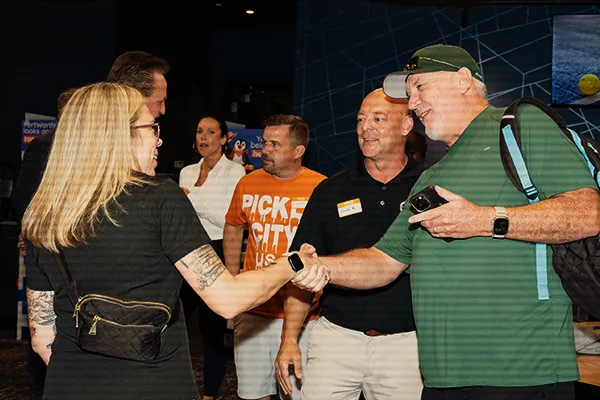
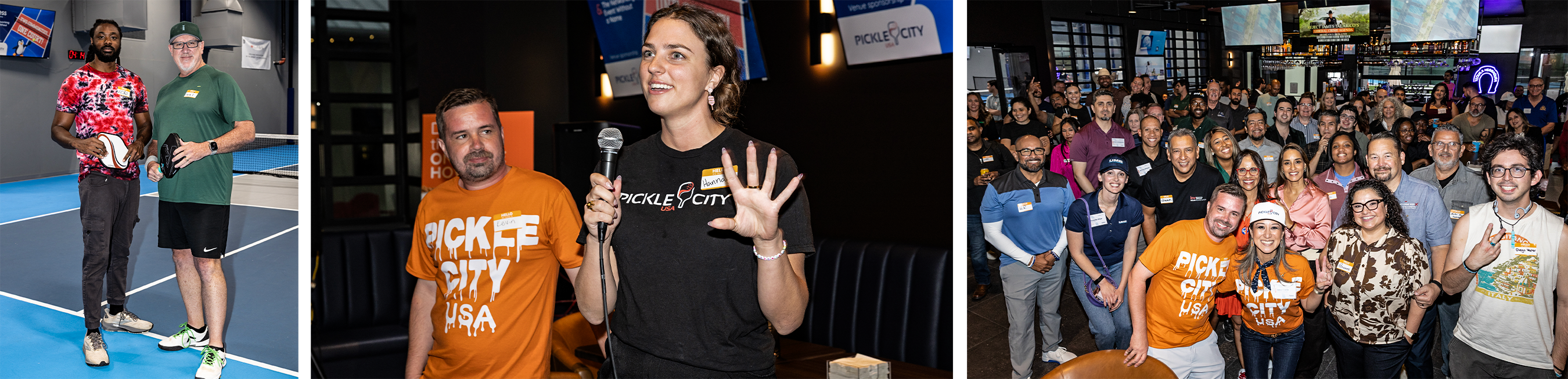
I was reminded of this recently at an Access Fort Worth event at Pickle City USA. More than 160 people came together for an afternoon of pickleball, conversation, and networking. There were plenty of business owners and professionals in the room, but what stood out to me wasn’t the number of people or the businesses they represented. It was how quickly the traditional networking dynamic disappeared once people started playing. And that got me thinking about something I’ve long believed about advertising and branding.
Sometimes the most effective way to communicate what a brand stands for is to stop talking about it and create an opportunity for people to experience it.
The Difference Between Telling People and Letting Them Experience It
Businesses spend considerable time deciding what they want people to think about them. We develop positioning statements, identify differentiators, create messaging platforms, and build campaigns designed to communicate those ideas. All of that work matters, but there’s a limitation that often gets overlooked. Just because a company tells people something about itself doesn’t mean people believe it. Think about how many businesses describe themselves as trustworthy, customer-focused, innovative, or committed to relationships. Those statements may be completely accurate, but they’re also easy to make. There’s very little separating a company that genuinely lives those values from one that includes them in its marketing materials. The distinction becomes clear when someone actually interacts with the business.
A restaurant can advertise exceptional service all day long, but the experience begins when someone walks through the door. A credit union can talk about putting members first, but that promise becomes meaningful when a member needs help making a difficult financial decision. A professional organization can promote the value of its community, but people won’t fully understand that value until they experience the relationships within it.
Advertising can create an expectation. Experience determines whether that expectation becomes a belief.
That’s an important distinction because we sometimes ask advertising to accomplish things that only the business itself can deliver. We expect campaigns to create loyalty, establish trust and develop relationships. Advertising can certainly contribute to those outcomes, but it cannot manufacture the personal experiences that make them real, which brings me back to pickleball.
A Pickleball Paddle Can Be a Pretty Good Conversation Starter
Access Fort Worth is building a business membership community around purposeful relationships. The idea is straightforward. Instead of collecting contacts, members develop connections with people they know well enough to call for advice, recommend to others, or enjoy spending time with. That’s an appealing proposition, but it’s also difficult to communicate through traditional advertising. Nearly every networking organization promises opportunities to connect with other professionals. Most have events, membership benefits, and some variation of a business directory. If you’re unfamiliar with the organizations, their descriptions can start to sound remarkably similar.
The challenge isn’t necessarily explaining what Access Fort Worth does. It’s helping people understand what makes the experience different. The event at Pickle City USA provided an interesting example of how that difference can be communicated without needing to explain it repeatedly. When I arrived, I started doing what I normally do at these gatherings. I introduced myself, caught up with people I knew, and met a few new faces. At one point, I started talking with a younger gentleman named Noah. We talked about sports, getting older, staying active, and how much our bodies remind us of activities we probably should have continued 20 years ago, like stretching. We talked about soccer, baseball, disc golf and why watching professional sports doesn’t always hold the same appeal it once did.
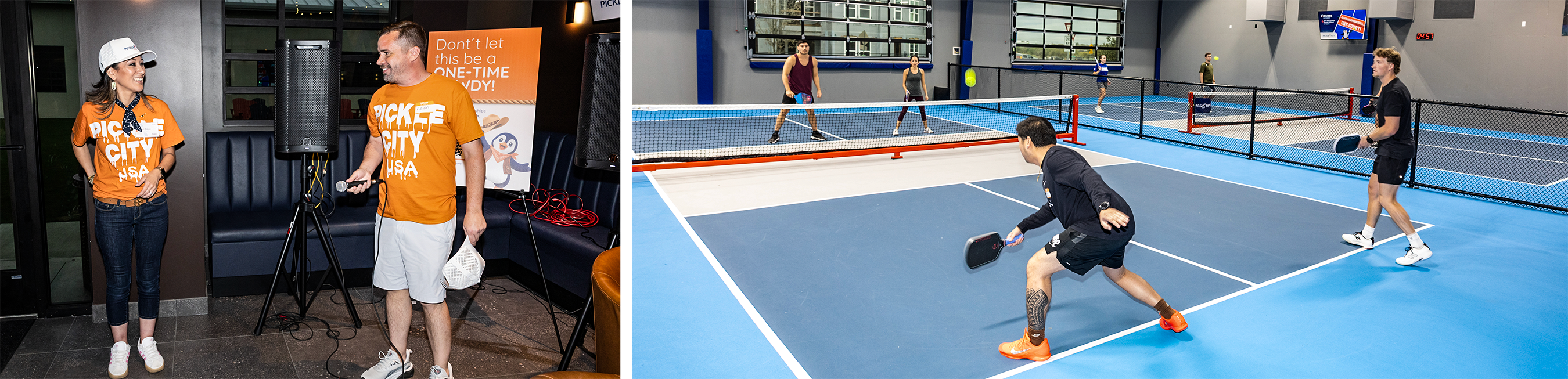
What we didn’t spend much time talking about was business. Eventually, I suggested we grab some paddles and hit a few balls. We had a natural conversation about things we both enjoyed, found some common ground, and moved into an activity together. There was no reason to force a business conversation, since we were already building the foundation of a relationship. Throughout the afternoon, I watched variations of that interaction happen around the courts. People were laughing about their abilities, trying to remember the rules, introducing friends and encouraging others to join games. Some were competitive. Others were just trying to keep the ball in play. I fell somewhere in the middle, although after not playing for a couple of years, my body probably had a different opinion.
There were still business conversations happening, of course. I heard people discussing insurance, commercial services, business opportunities, and introductions they could make for one another. But those conversations felt like natural extensions of the relationships being formed rather than the primary reason everyone was interacting. The activity had changed the environment. Instead of asking people to find a reason to talk to someone they didn’t know, the event gave them something to do together, and the conversations followed.
The Brand Was Being Demonstrated Without Needing to Be Explained
Consider what Access Fort Worth wants people to understand about its community. The organization isn’t simply promoting access to other business professionals. It’s promoting the opportunity to build relationships that become useful, enjoyable, and meaningful over time.
At Pickle City USA, people weren’t being asked to imagine that experience. They were participating in it.
Someone who might have felt uncomfortable approaching a stranger at a traditional networking event could simply ask whether there was room for another player. A conversation that might have started with a job title instead started with a joke about someone’s backhand. People who might never have interacted in a conference room suddenly had a shared experience to reference the next time they saw each other. From a branding perspective, that’s valuable because the event created an environment where the organization’s promise could be experienced firsthand.
It also revealed something about the role of creative thinking in marketing. We tend to associate creativity with the things people see: advertisements, graphics, videos, websites and campaigns. But creativity can be just as valuable when applied to the experience surrounding a brand. Choosing a pickleball venue instead of a traditional meeting room wasn’t simply a change of scenery. It changed how people interacted. The activity introduced movement, humor, shared challenges, and opportunities for spontaneous conversation. Those elements made the experience feel less like a networking obligation and more like spending time with people you might actually want to know. That doesn’t mean every business should host a pickleball event. The lesson isn’t about the sport. It’s about understanding what you’re trying to accomplish and designing an environment that makes the desired behavior more likely. For Access Fort Worth, the desired behavior is relationship building, and the event format supported that purpose.
There is another important distinction worth making. More than 160 people attended, which is a strong turnout for a community gathering. But attendance alone doesn’t establish whether the event accomplished its larger purpose. The more meaningful questions are whether people developed relationships, continued conversations afterward, returned for future events, or became active participants in the community. Those outcomes take time to evaluate. The afternoon demonstrated that the environment encouraged the kinds of interactions the organization wants to create.
Sometimes the Most Important Marketing Decision Isn’t an Advertisement
When businesses come to an advertising agency, they usually have an idea of what they need. They might ask for a campaign, a website, a video, or a new brand identity. Those are all legitimate tools, but I believe our responsibility is to understand what the business is actually trying to accomplish before deciding which tools make sense. A business seeking greater awareness may actually have a problem with how people understand its value. Another asking for more leads may have a customer experience that discourages people from taking the next step. A company looking for a stronger brand may already have a compelling story, but very few opportunities for people to experience what makes it different.
If we only respond to the requested deliverable, we risk missing the underlying opportunity.
The Access Fort Worth event illustrates why looking beyond traditional advertising can be valuable. If the goal is to help people understand the benefits of meaningful business relationships, a campaign explaining those benefits has a role to play. But creating an experience where people actually begin forming those relationships can make the message considerably more believable. The two approaches aren’t competing with each other. They serve different purposes.
Advertising can introduce the idea and encourage someone to participate. The experience gives that person something tangible to associate with the brand. Follow-up communication can then reconnect them with the people, conversations, and moments they remember. In fact, the follow-up message after the event asked an interesting question: What if those connections didn’t end at the event? That question moves the conversation beyond attendance and toward the organization’s larger purpose. It recognizes that the real value isn’t simply getting people into the same room. It’s what happens after they leave. I think that’s a useful way for any business to evaluate its marketing. Rather than focusing exclusively on what we want people to do immediately, we should also consider what we want them to remember, believe, and continue doing after the initial interaction.
Relationships Are Built in the Moments Between the Marketing
There’s a tendency in business to measure everything in terms of an immediate transaction. How many people attended? How many leads did we generate? How many appointments were scheduled? How many memberships were sold?
Those numbers matter, particularly when you’re responsible for a budget and need to understand whether an investment is producing results. But they don’t always capture the full value being created. A conversation at an event might lead to business next week, six months from now, or never. That doesn’t automatically make the conversation worthless. Someone might introduce you to a future employee, offer advice that changes how you approach a challenge, or connect you with an organization you wouldn’t otherwise have known about. Relationships create possibilities that are difficult to predict in advance.
This is where businesses sometimes undermine their own relationship-building efforts. They create an enjoyable experience and then immediately turn every interaction into a sales opportunity. The follow-up becomes a pitch, the conversation becomes a prospecting exercise, and the relationship is evaluated by how quickly it generates revenue. People can usually recognize when that shift happens. There’s nothing wrong with wanting business to come from networking. That’s part of why many people participate. But there’s a difference between developing relationships that may create business opportunities and treating every person as an opportunity that needs to be converted. The distinction affects how people experience you and, by extension, your brand.
At the event, I exchanged contact information with people I enjoyed meeting. I remember the conversations because we talked about things that interested us. Those interactions gave me reasons to recognize and reconnect with those people later. That’s a much stronger starting point than having someone’s contact information without remembering why we exchanged it. A business that remembers a client’s preferences demonstrates attentiveness without needing to advertise it. A company that helps someone solve a problem before asking for a sale demonstrates its priorities through action. An organization that introduces two people who could genuinely benefit from knowing each other creates value without being part of the transaction. These moments may seem small, but they add up to something much more meaningful: a reputation.
What Businesses Can Learn From an Afternoon on the Court
The principle applies well beyond networking organizations. Every business has opportunities to create experiences that reinforce what it wants people to believe about the brand. A financial institution that wants to be known for education can create situations where members feel more confident making financial decisions. A healthcare organization that wants to be recognized for compassionate care can examine the moments when patients feel uncertain and design better communication around them. A professional services company that promotes collaboration can involve clients in meaningful conversations before presenting a predetermined solution. The objective isn’t to create an elaborate experience for the sake of being memorable. It’s about identifying what matters to the people you’re trying to reach and making that part of how they interact with your organization. Before planning the next campaign or customer event, I’d encourage business leaders to consider a few questions:
What are we promising? Identify the belief you want people to develop about your organization.
Where can people experience that promise? Look beyond advertisements to the interactions that make your message credible.
Are we making connections easier? Remove unnecessary barriers that keep people from engaging naturally.
What happens afterward? Create opportunities for relationships and positive experiences to continue.
Are we measuring the right outcomes? Consider engagement, repeat participation, and relationship development alongside immediate transactions.
These questions won’t replace a marketing strategy, but they can help determine whether the strategy is focused on communicating something meaningful or simply generating more activity.
The Conversation Shouldn’t End When the Event Does
I’ve been thinking about that afternoon because it reminded me how often we complicate things that should feel natural. We create messaging frameworks to explain that we care about relationships. We develop campaigns to communicate authenticity. We spend time finding creative ways to tell people we’re different. Sometimes the better approach is to give people an opportunity to discover those things for themselves.
That’s what made the Access Fort Worth event interesting to me. The organization brought people together, provided an environment where interaction felt natural, and allowed relationships to begin without making business the center of every conversation. Whether those relationships continue depends on the people involved and what happens next. But the event created a starting point that was consistent with the community Access Fort Worth is working to build.
I’d be interested to hear how other organizations approach this. Have you experienced an event, customer interaction, or business relationship that changed how you thought about a company? Was it something the organization deliberately created, or did it happen naturally? It’s a worthwhile conversation to have with your own team, particularly if you’re planning a campaign, event or customer experience. Share this article with someone who thinks about these challenges differently than you do and compare perspectives. You may discover that the opportunity to strengthen your brand has less to do with what you’re saying and more to do with what people are experiencing.
For me, the afternoon was a reminder that good branding doesn’t always look like branding. Sometimes it looks like a group of people laughing on a pickleball court, remembering each other’s names and making plans to connect again.
The strongest brands don’t just give people something to remember. They give people a reason to care.
Continue the Conversation
Want to see how purposeful connections can become part of a business community? Explore Access Fort Worth and take a look at the photos from the Pickle City USA event.
For more perspectives on how branding, advertising, and business strategy work together, explore Glint Advertising.


